Showing posts with label accelerating writing. Show all posts

Sunday, 1 October 2017

Monitoring students for Writing - Reflection on my Inquiry

This Term I have been focussing on writing of my students. I have closely monitored my target students and other students to make shifts happen in their learning. Below is a weekly recount of the teaching strategies I tried with them.


Week 1 and 3
What did I notice?

Most students are not focussing on using powerful words. This is because they do not have the vocabulary to explain specifically what they want to say in their writing.


What will I do to fix this?
I will be focussing on clines where students will explore how they can use powerful words instead of simple words in their writing
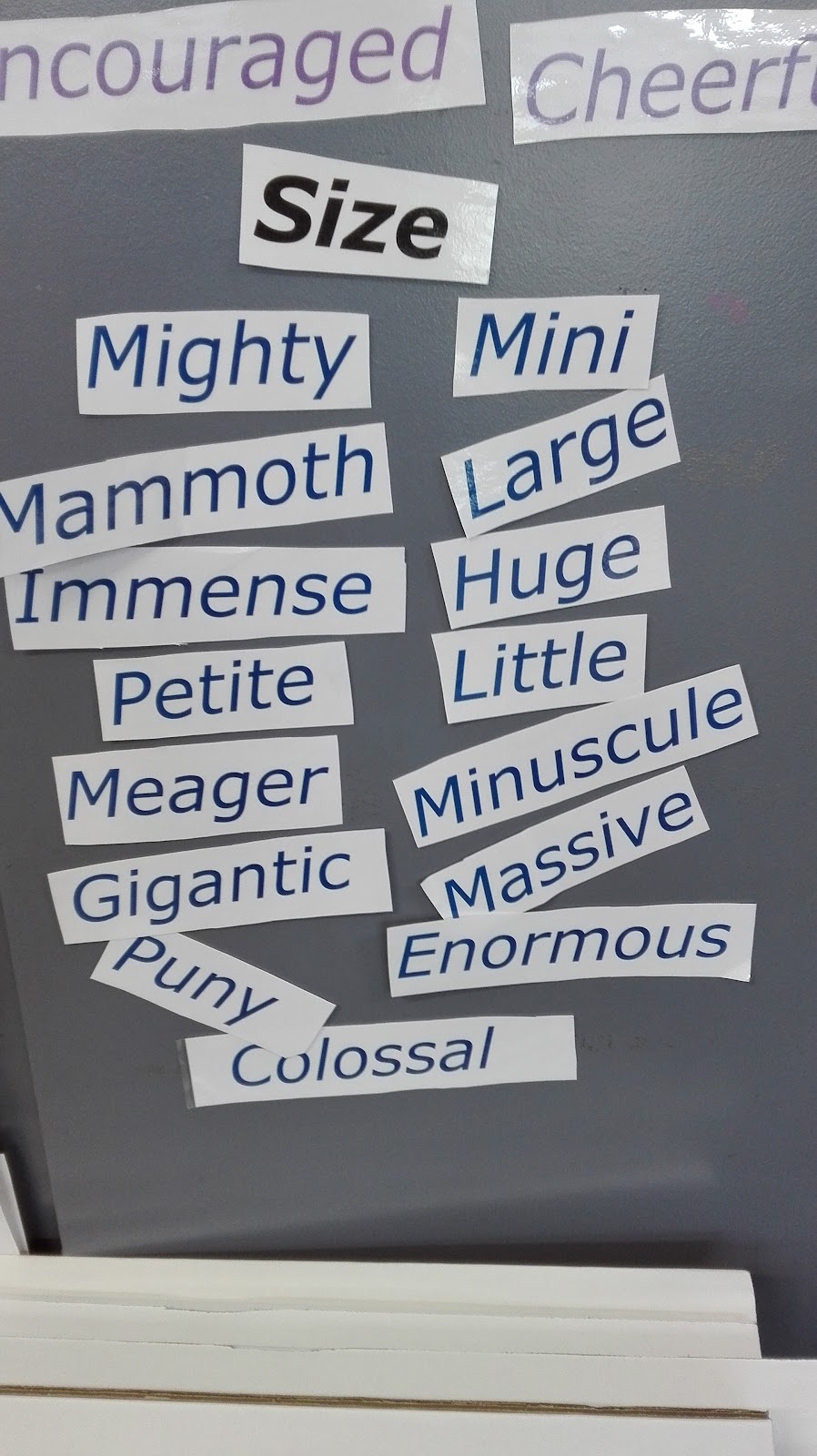
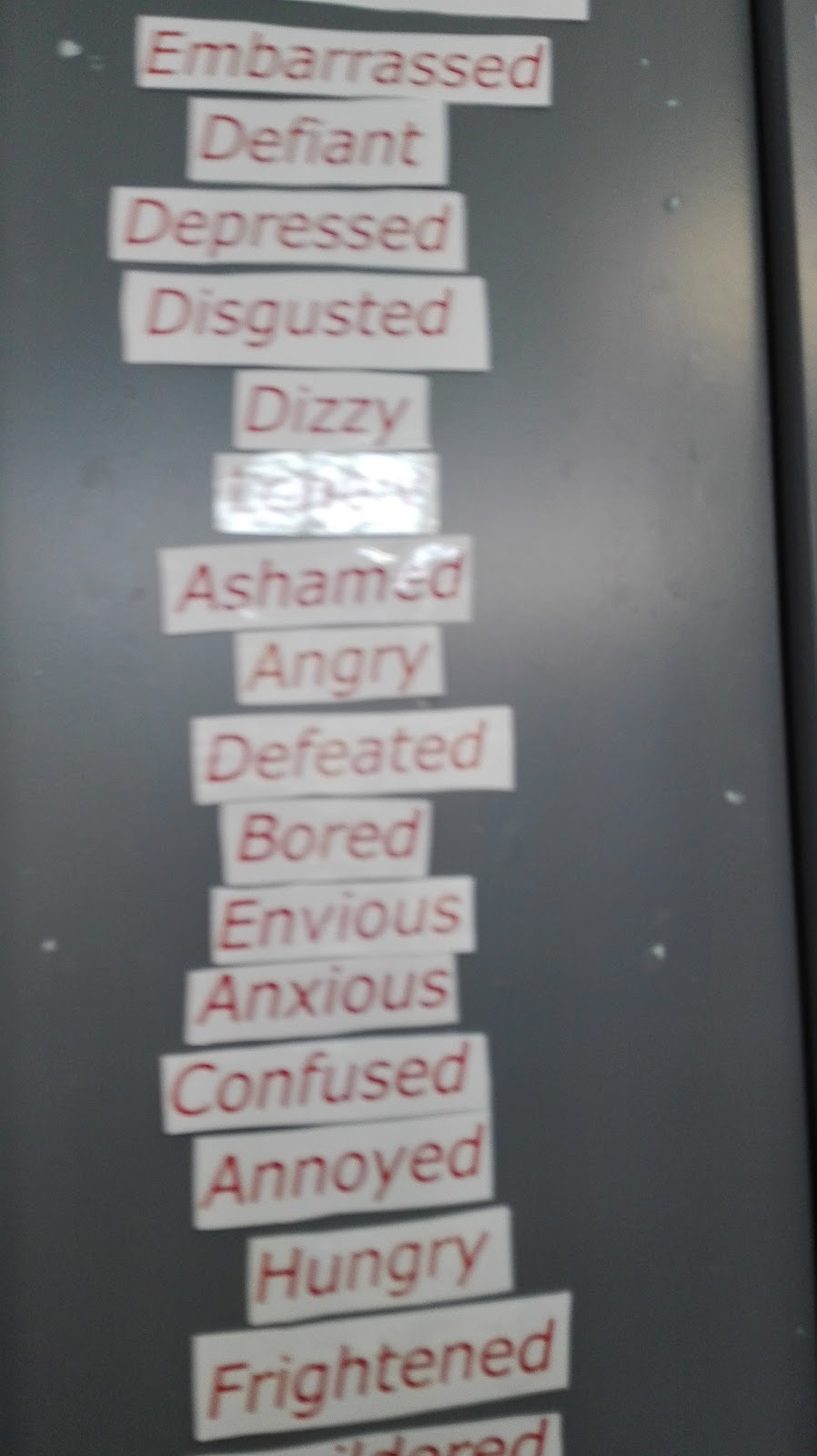


Making clines and brainstorming words for everyday words made students think about how they could use these in their writing. We brainstormed words and made a word wall.
My next step is to constantly encourage students to use the word wall when writing.
Week 3 and 4
Narrative Writing
This week we focussed on writing narratives. This was done as a whole class. I purposely grouped my target students with other students. They learnt to write a scene for their narratives. I gave them Prior to teaching this lesson, I had noticed that students were writing very short introductions for their stories. These introductions lacked detail mainly because I had not taken them through each step on how to include detail to capture the reader’s interest. Breaking down the narrative structure into little comprehensible bits was good. This lesson shows how to write an orientation for a narrative. I mainly focussed on teaching how to set the scene. Using sense words to describe the scene was the best way I could ask them add detail.


 Later I used an exemplar, that the students analysed to see what good description of a scene looks like. I am happy with the outcome, but my students need to practice writing to embed this newly learnt skill.

Next Step
In order to write detail for their stories, students need the words that they can use in their description. I would focus on front loading vocabulary for them to write with greater ease.
The example that I used was from a junior journal-


Click on the link below to view on setting scenes for narrative writing.

Week 5
We made links with reading to writing. When reading journals, I constantly drew their attention to the way the author has introduced the characters for his story. we noticed that most of the narratives started with a dialogue. So we tried using dialogue in our stories. One of the exemplars used was from 'New Boots' by Tim Jones.

Week 6 and 7

We wrote our narratives and then analysed them against a rubric.
The lesson mainly captures their understanding of how to use the rubric and be able to analyse and give feedback to their buddies and themselves. To begin with, students have used three elements of the rubric. These are:

  • captivating audience interest
  • Punctuation
  • Character and setting

    Click on the link below to view a complete lesson.
Using the rubric themselves made students aware of how they needed to write in order to capture the interest of their audience. They talked about how punctuation helped the reader and how dialogue could be captivating for the audience.

Week 8 and 9
We integrated our topic studies to different areas of the curriculum. This helped improve their vocabulary.
Students had to prepare for the Ako evening where they would be presenting their learning to their whanau. Knowing the words to explain their learning has motivated them to confidently speak in front of their audience. I am happy with the outcome. I had a conference session where I asked them how learning vocabulary has helped them. They all agreed that they now knew lots of words on the topic and could speak and write about it. Link to the plan for integrated studies for different group are listed below.

Detailed plan and lessons can be found on the website below.
Lessons on integrated topic studies - Part 1 ( Class OnAir)

Lessons on integrated topic studies - Part 2 (Class onAir)


Monday, 21 August 2017

My Inquiry for T3 and T4 - Maori student's writing

For the second half of the year we at Tamaki are focussing on Maori student's writing. I have chosen five students from my class who are mostly from Maori backgrounds. What I have noticed with these students is that their writing lacks detail and depth. Most students in this group are not motivated enough to revisit their drafts to improve their stories. They are very reluctant to use illustrations/ exemplars to analyse their writing. Through my inquiry, I want to encourage these students to try and use specific and interesting vocabulary to create mood and effect in their stories.
My inquiry question is - Does specific teaching of new words help in improving the student's writing
Who are our target students for Writing in Term 3 and 4?
Hinemoa – AT level 1
Maani – AT L1
Dereon - ATL2
Leon – ATL1
Railey – BL1
What do we know about them socially?
All students respond very warmly. They are happy in class and in school. All except for Railey has English as his second language.
What can these students do?
RB
English is a second language for Railey. He is very fluent in Filipino and speaks Filipino at home. Railey is learning to construct sentences that make sense. He is becoming fluent at writing basic sight words. He also tries to sound out new words phonetically. He tries to learn spelling of new words. Railey is very unsure and so he constantly asks for help to make sure what he write is written correctly.
MR
Maani is fluent at writing simple sentences. She can write some compound sentences and is not very consistent with using her punctuation correctly. Maani is learning to elaborate on her ideas and is learning to use specific vocabulary in her writing.
HT
Hinemoa has lovely ideas but is not able to express herself clearly when writing. She is learning to use paragraphs for her ideas. Hinemoa is learning to use new words in her writing and is beginning to use capital letters and full stops in correct places. She is also learning to use interesting words to make her story capitivating.
LP
Leon had very detailed and elaborate stories when it comes to narrating them orally. He find it hard to write his story that makes sense. He is learning to use correct punctuation and powerful interesting words in his writing. Leon s learning to add detail to his ideas and use paragraphs for his ideas.
DR
Dereon writes extensive stories but sometimes his ideas are repetitive and so his stories can get monotonous. He is learning to put capital letters and full stops in correct places. Dereon is learning to use specific vocabulary and add interesting words to his stories. He is learning to use paragraphs for his ideas.
What steps would I take to improve outcomes for my target students in writing?
  • Share a few good examples of writing and analyse these writings, particularly for Vocabulary and discuss why certain words can have more affect that others.
  • Make word clines.
  • Encourage students to use more specific words in their writing.
  • Encourage students to identify and attend to new words that they come across while reading text.
What does “at expectation” look like for these students? How, by focusing on this, do I propose to contribute to and influence Student Achievement Outcomes?
I am hoping that in course of time, students will use interesting words which will come out naturally when writing. Students will understand the subtle differences in the synonyms of words and will fluently use the correct words to set the scene and develop mood, expression and feelings in their stories.

Friday, 4 November 2016

Teaching Writing in my Class


I had my literacy observation recently and one of the  criteria is to record our lesson and then analyse the  lesson with a critical buddy. My critical buddy is Paula Were who does PLD for Writing at our school.

My goals from my last observation were-

Specific development of vocabulary eg clines
Continue building power words
Seeking the very best choice to avoid ‘over blown’ language


I not only wanted to achieve the above goals as a teacher but also wanted my students to to achieve their goals to become better writers. The group that I am teaching is  mixed ability group and their goals are to write interesting stories in order to create impact on their audience. To achieve this goal they have the following Success Criteria-

  • Use detail for ideas
  • Use correct punctuations
  • Use Powerful words and similes
  • Use dialogue
  • use emotive language

Connections with Reading and writing
To start the lesson I made connections to the text that they had read the previous day.
I drew their attention to the new words and phrases they had read in text. I made sure that they understood the meanings of all the new vocabulary so that it becomes easy for them to use these in their writing.

Global Connections
The picture prompt that I used was that of a roller coaster. This was because I wanted to make connections with the recent incident that happened at Dream world.


Specific development of vocabulary
Most of my students use simple words in their writing or else they may use overblown words that really do not make much sense. To help them use specific vocabulary I made clines.


Making connections with culture
After explaining the word cline I asked my students if they could make any cultural connections to the roller coaster. It is important that we acknowledge and cherish what our students bring with them. In this case the students said that the roller coaster looked like a Taniwha, an eel, a huge wave or a whale, a dragon's tail and a tunnel.


I reminded students several times about their goals and gave them hints on how they could transfer the new words learnt to their writing.  Here is what they produced in about 5 minutes.


Revisiting Learning intentions and success criteia
To sum up students read their stories to each other and checked to see if their friends had met the success criteria. Next, students checked if they had achieved their goals. They checked this with their buddies and then ticked against the success criteria if they had achieved them.


Follow up task
A follow up task was to ask students to highlight detail, powerful words, dialogue and emotive words in a text on roller coasters. This was a winding off activity that would help them to remember their goals. Here is the text that was given.


To sum up students read their stories to each other and checked to see if their friends had met the success criteria. Next, students checked if they had achieved their goals. They checked this with their buddies and then ticked against the success criteria if they had achieved them.


Reflection and feedback - The feedback that I got from my critical friend was very good. To sum up she said that the connections with the reading and writing, culture and student goals were very elegantly done.


Link to my plan for the above lesson