Tuesday, 13 February 2018

Noticing and investigating for effective internal evaluation

It is the beginning of the year and I am finding out where my students are in their Reading, Writing or Maths. I am on the noticing phase of the evaluation cycle given below.


Initial testing results in Maths showed


The graph above shows that more than 50% of students were below or well below in Maths. I also noticed that these students were the ones who were very disengaged during Maths times as well.
I had no clue why they did not like doing Maths and so I collected some student voice.
This was mainly based on their past experiences in their previous classes.

I asked them if they liked Maths and if no why? 
These were their reasons -

7 out 10 said that they did not like it
7 out of 10 said they find it hard.
It's always a catching up with their peers and it seemed that they knew very little.
They were kind of scared that they might not understand and get into trouble for that.
because they were shy to ask if you went wrong.

When I asked the similar question of my Stage E5 and 6 students they said that-

Maths was like a good challenge
When I go to the shops they could count the money to give to the shopkeeper.
because it's fun.

What does this mean for me as a teacher? because I need to tip the way the majority of students respond to Maths learning. So here is my plan-

  • Talk to the class and tell them that Maths is no ghost.
  • Tell them that anyone can do Maths
  • Support them and show them that I care when they get stuck.
  • Slow down when they do nor understand.
  • Celebrate when they accomplish.

Friday, 2 February 2018

Strengthening Whanau Engagement

One of our goals this year is to ' Explore strategies to strengthen whanau engagement'.
I was listening to 'Anjila Dixon' the lady from the Ministry at one of our staff meetings who was talking about the importance of whanau engagement. I want kid's whanau to be a part of their learning and they are always welcome.  But how and what would be the most appropriate way to get them into school? This question has been on my mind for a few weeks now!

It is my Mother's birthday today who lives in India. I was getting ready for the day at school and in between I had to ring her up and wish her as I was mindful of the time difference between the two countries. After roll I told my class that I needed two minutes to wish my mum. They smiled back at me and then one voice called out " Can we wish her too"?
How wonderful was that! After all " If you want a friend, first you need to be a friend".  If I wanted their parents to come into the class and engage in learning I first needed to introduce them to my Mother! What an opportunity!

I video called my mum and my whole class sang 'Happy Birthday' for her. She was so delighted! She thanked them, wished them to do well in their learning, she inquired about a student with a cast on her leg and the student told her story about how she fell from the tree, she wished her well and then she turned to me and asked me to get chocolates for each student in my class. Through out the conversation there were heaps of giggles and laughters. It was such a lovely whanau feeling!

It is this togetherness, sharing and celebrating of moments that brings us together! Introducing my mum to my class immediately established a bonding between me and my students who are two days old in my class. Hopefully, I have broken the ice and my students will feel equally comfortable introducing their whanau to me! My aim is to make our parents feel valued at school where they willingly share ideas and expertise in the learning of their children.

Later in the day I got hot chips and chocolate fudge for my students to celebrate mum's birthday.


Thursday, 1 February 2018

Physical environment that reflects the culture of your students


Most of my students in class are from Maori and Pacific backgrounds. This year I decided to make the physical environment that reflects the culture of my students so that the students who come to my class feel welcomed and 'at home'. More importantly, I wanted them to make connections by sharing their stories and recognise a common thread between different cultures to understand the idea of 'Unity in diversity'.

One of the Principles of Ka Hikitia is that ' Indentity, Language and Culture count'.

Students do better in education when what and how they learn builds on what is familiar to them, and reflects and positively reinforces where they come from, what they value and what they already know. Maori students are more likely to achieve when they see them selves, their parents, whanau, hapu, Iwi and community reflect in learning and teaching.

I wanted to look at each aspect of the classroom.

So to start with, I went looking for borders that I thought would be more familiar and attractive for my students. I bought some fabric that would solve the purpose. Yes, the borders in my class are out of fabric. The positive to this is that they and can be used year after year.


Students noticed them instantly and said things like " these are all the Kiwiana things". " I know this is a symbol for a fern". " Oh that's a tapa cloth and a maori pattern". " Here's the Pohutukawa and the flax weaving, and then they started to talk amongst each other about the Tapa cloths that their aunty has in their lounge and the fern that grows in the backyard, the weaving in the Marae,  and the list goes on. I was thrilled by their observation. Their personal stories that they instantly recalled were the most precious. I had not envisaged that a small thing like borders could bring this kind of an outcome. This is the first step towards acknowledging my students. I am excited to explore what else I can do to encourage my students to love and be excited about their class. 


Tuesday, 23 January 2018

Manaiakalani PLD on New Google Sites

 New Sites are much easier to make than the old classic sites.
If you are making a site for the first time, I suggest you go for new sites.

Today we had a great PLD with Fiona Grant, our Manaiakalani facilitator, on how to make class sites using new sites. One of the most important things is to share your folder that would have your lessons or site material. It will save you time from replying to those endless emails that seek permission to view and you will not be directing students to different places to look for resources.
Now how do you do this? Watch the video below on how to do this.


How to make a button for your site
Click the video below to see how you can make buttons.

Creating a class site using New sites


This is more of post where I am revising what I learnt today. For more details and much more crisp teaching from Fiona, click on the link below.

https://sites.google.com/a/manaiakalani.org/digital-immersion/orientation-2018

Saturday, 4 November 2017

COA - Art lesson - Expressionism

This lesson was inspired by the New Zealand artist Sheila Brown. Students in my class were learning about expressionism. Through this lesson students learnt how artists express themselves. They understood that colours chosen by the artist have a story to tell and that artists tell their story through the selection of their subject and shades of different colours.
I enjoyed teaching this lesson. The part of the lesson that excited me the most was when students related themselves to the subject they had chosen. Their writings were a reflection of their thinking and connections to the subject of their artwork. They could describe why their subject inspired them. They thoughtfully chose the background colours to express their feelings. There was a lot of critical thinking involved in the lesson. They not only learnt about the techniques that were used by the New Zealand artist Sheila brown but also made excellent connections with their own lives and express their stories. I am very happy with the outcome.


A complete lesson can be viewed by clicking the link below.
https://sites.google.com/a/manaiakalani.org/onair/sharma-15

Sunday, 1 October 2017

Monitoring students for Writing - Reflection on my Inquiry

This Term I have been focussing on writing of my students. I have closely monitored my target students and other students to make shifts happen in their learning. Below is a weekly recount of the teaching strategies I tried with them.


Week 1 and 3
What did I notice?

Most students are not focussing on using powerful words. This is because they do not have the vocabulary to explain specifically what they want to say in their writing.


What will I do to fix this?
I will be focussing on clines where students will explore how they can use powerful words instead of simple words in their writing
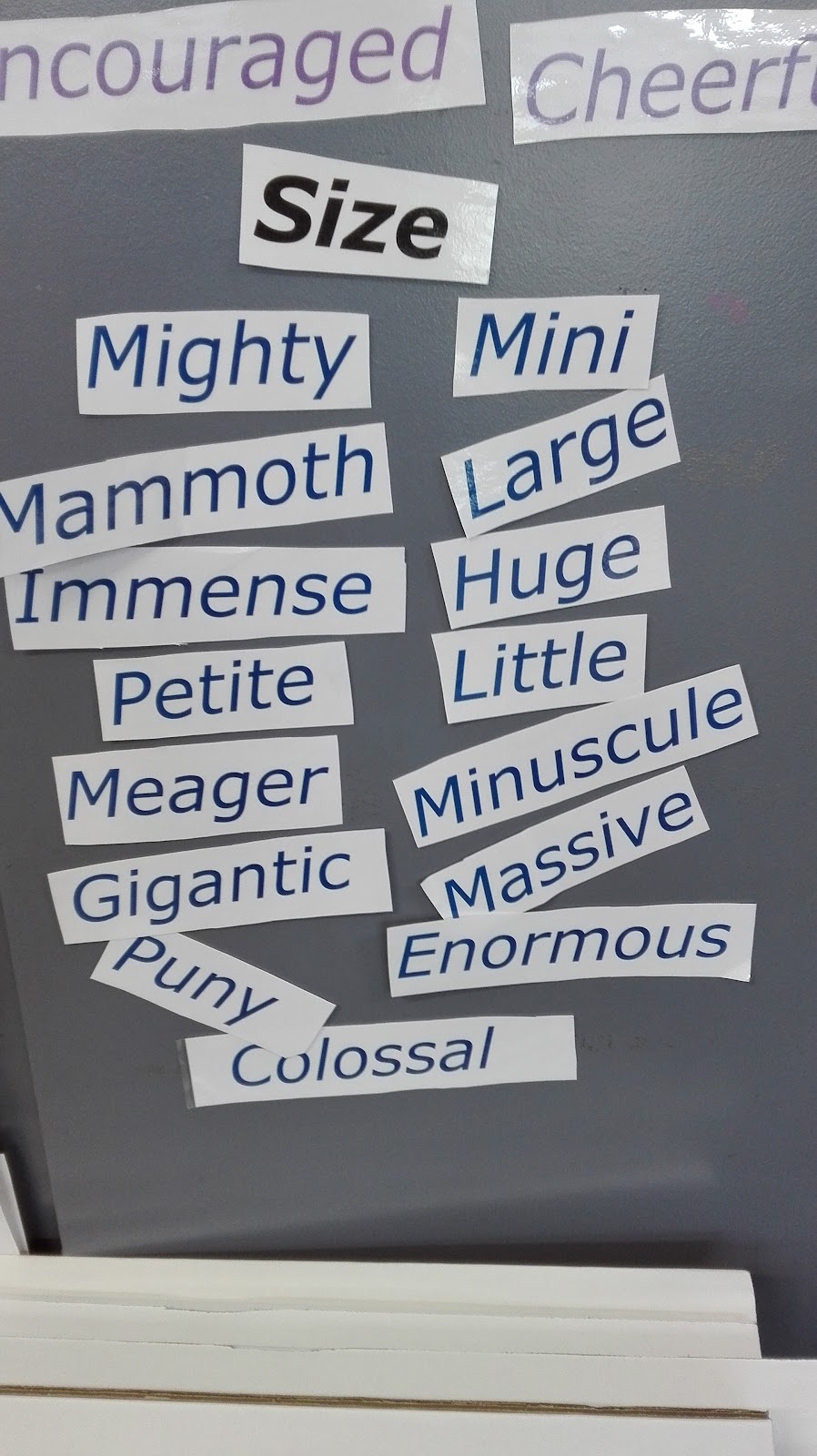
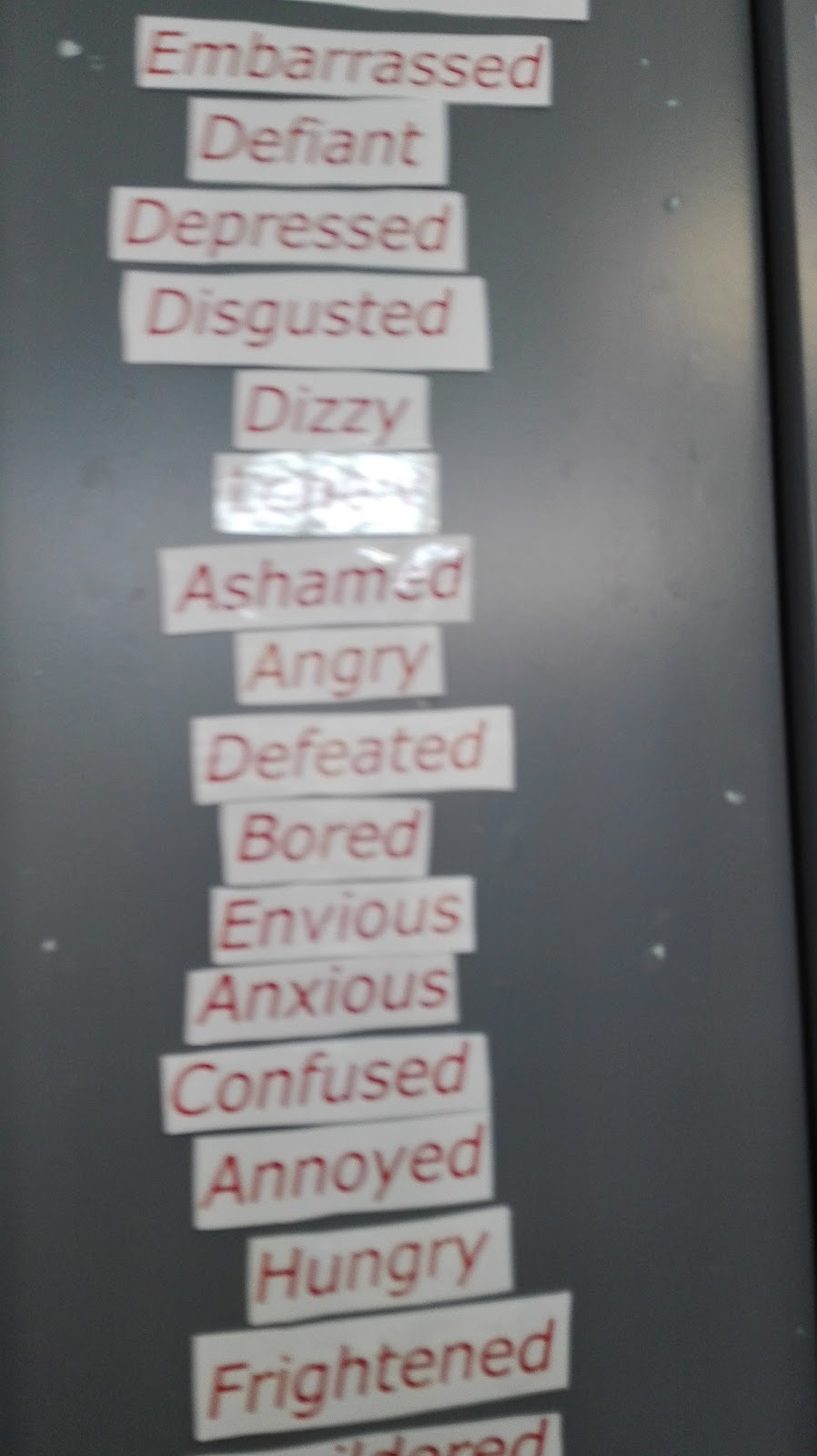
   

Making clines and brainstorming words for everyday words made students think about how they could use these in their writing. We brainstormed words and made a word wall.
My next step is to constantly encourage students to use the word wall when writing.
Week 3 and 4
Narrative Writing
This week we focussed on writing narratives. This was done as a whole class. I purposely grouped my target students with other students. They learnt to write a scene for their narratives. I gave them Prior to teaching this lesson, I had noticed that students were writing very short introductions for their stories. These introductions lacked detail mainly because I had not taken them through each step on how to include detail to capture the reader’s interest. Breaking down the narrative structure into little comprehensible bits was good. This lesson shows how to write an orientation for a narrative. I mainly focussed on teaching how to set the scene. Using sense words to describe the scene was the best way I could ask them add detail.


 Later I used an exemplar, that the students analysed to see what good description of a scene looks like. I am happy with the outcome, but my students need to practice writing to embed this newly learnt skill.

Next Step
In order to write detail for their stories, students need the words that they can use in their description. I would focus on front loading vocabulary for them to write with greater ease.
The example that I used was from a junior journal-


Click on the link below to view on setting scenes for narrative writing.

Week 5
We made links with reading to writing. When reading journals, I constantly drew their attention to the way the author has introduced the characters for his story. we noticed that most of the narratives started with a dialogue. So we tried using dialogue in our stories. One of the exemplars used was from 'New Boots' by Tim Jones.

Week 6 and 7

We wrote our narratives and then analysed them against a rubric.
The lesson mainly captures their understanding of how to use the rubric and be able to analyse and give feedback to their buddies and themselves. To begin with, students have used three elements of the rubric. These are:

  • captivating audience interest
  • Punctuation
  • Character and setting

    Click on the link below to view a complete lesson.
Using the rubric themselves made students aware of how they needed to write in order to capture the interest of their audience. They talked about how punctuation helped the reader and how dialogue could be captivating for the audience.

Week 8 and 9
We integrated our topic studies to different areas of the curriculum. This helped improve their vocabulary.
Students had to prepare for the Ako evening where they would be presenting their learning to their whanau. Knowing the words to explain their learning has motivated them to confidently speak in front of their audience. I am happy with the outcome. I had a conference session where I asked them how learning vocabulary has helped them. They all agreed that they now knew lots of words on the topic and could speak and write about it. Link to the plan for integrated studies for different group are listed below.

Detailed plan and lessons can be found on the website below.
Lessons on integrated topic studies - Part 1 ( Class OnAir)

Lessons on integrated topic studies - Part 2 (Class onAir)